
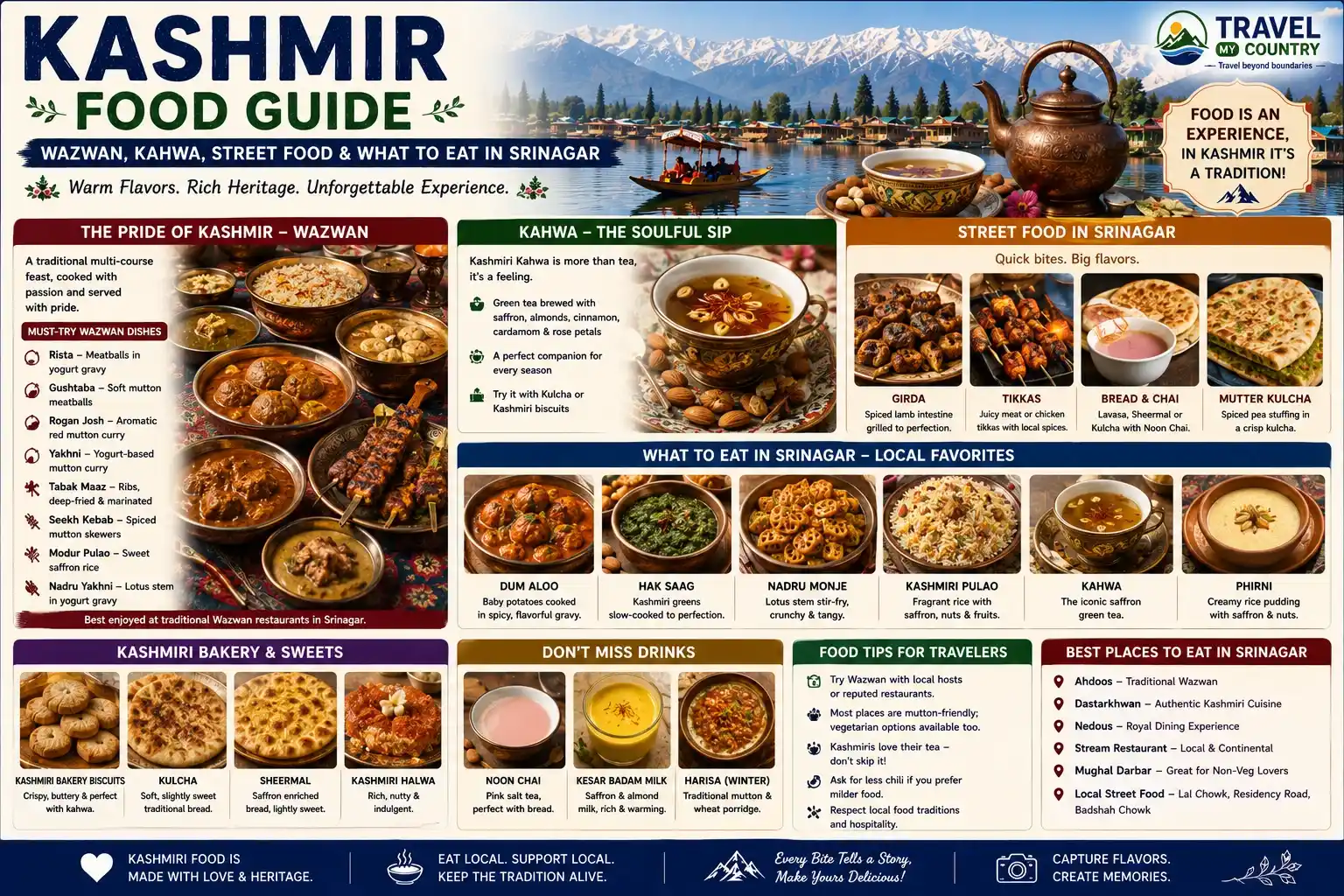
Kashmiri food is one of the most distinctive and underrated culinary traditions in India — a cuisine built around slow-cooked meat, aromatic spices (saffron, fennel, dry ginger, cardamom), and cooking techniques brought by Mughal and Central Asian influences over centuries. Most visitors arrive expecting generic North Indian food and leave having had one of the most memorable meals of their trip. This guide covers what to eat, where to eat it, what to buy, and how to avoid the tourist traps.
Wazwan: The Grand Kashmiri Feast
Wazwan is Kashmir’s ceremonial multi-course meat feast — traditionally prepared for weddings and major celebrations by a Waza (master chef). A full Wazwan has 36 courses, though a tourist-adapted version typically presents 7–12. The defining element is that almost every dish is meat (lamb and mutton dominate; chicken is considered a lesser protein by Kashmiri food traditionalists). The feast is served on a large copper plate (traem) shared between four guests, with rice mounded in the centre and the courses arranged around it.
The essential dishes in any Wazwan: Rogan Josh — lamb cooked in a sauce built on Kashmiri red chillies (not tomatoes), yoghurt, and spices; the colour comes from the chilli and ratanjot (alkanet root), not heat — Rogan Josh is medium-spiced. Yakhni — lamb braised in yoghurt with whole spices; white, creamy, mild. Tabak Maaz — rib sections of lamb deep-fried after being slow-cooked until the meat is falling off the bone; arguably the most crowd-pleasing dish in the entire feast. Dhaniwal Korma — lamb with fresh coriander. Aab Gosht — lamb cooked in milk; one of the more unusual preparations. Gushtaba — minced meat pounded to a smooth paste, formed into large balls, cooked in yoghurt gravy — traditionally the closing course of a Wazwan. Methi Maaz — lamb with fenugreek. Where to eat Wazwan in Srinagar: Mughal Darbar (Residency Road — the most consistent over 20+ years), Ahdoos Restaurant (Residency Road — an institution since the 1940s), and Shamyana at the Lalit Grand Palace for a refined hotel version.
Kahwa: Kashmir’s Ceremonial Green Tea
Kahwa is the Kashmiri spiced green tea — made with green tea leaves, saffron, cardamom, cinnamon, and crushed almonds, served in small bowls. It is consumed throughout the day in Kashmir (morning, after meals, as a guest welcome ritual) and it is genuinely one of the most distinctive and comforting beverages in South Asia. The houseboat morning ritual of Kahwa served with Kashmiri girda (flatbread) as you watch the lake come to life is something guests consistently describe as a highlight of their trip. Good Kahwa has a visible saffron tint, a warm cinnamon aroma, and a clean finish without bitterness. Pre-packaged Kahwa is widely available in Srinagar markets (Polo View Market, Residency Road) — a 100g box costs ₹150–₹300 and makes a practical and meaningful souvenir. We advise guests to buy from established shops rather than houseboat or shikara vendors (quality varies significantly).
Noon Chai (Pink Tea)
Noon Chai (also called Sheer Chai or “pink tea”) is a uniquely Kashmiri preparation — a salty, pink-coloured tea made from gunpowder green tea, salt, baking soda, and milk. The pink colour comes from a chemical reaction during the extended boiling process. The taste is savoury and slightly unusual to those expecting sweet tea — more like a warm salty broth than a typical cup of tea. Locals drink it for breakfast, dunked with Kashmiri bakarkhani (a thick, layered bread) or girda. It is an acquired taste for many tourists, but worth trying — it is unlike anything else in India and entirely specific to this region.
Street Food in Srinagar
Srinagar’s street food scene is underrated. Seekh Kebabs at the makeshift grills on Polo View Market and near the main shikara ghats — minced lamb or beef on skewers over charcoal, served with mint chutney and Kashmiri lavasa (thin bread). The charcoal smoke is part of the flavour. Modur Pulav — sweet rice cooked with saffron, dry fruits, and milk; typically available at festival times and certain bakeries. Kulcha Naan from the traditional wood-fired tandoors of the old city bakeries (around Nowhatta and Maharaj Gunj) — flat, slightly charred, perfect with Kahwa. Shami Kebabs from the lane kebab stalls near Lal Chowk — dense, spiced, made fresh. Phirni — a rice-based dessert made with milk and sugar, set in earthenware bowls, scented with saffron and cardamom. Available at sweet shops on Residency Road.
Kashmiri Saffron — The World’s Finest
Kashmiri saffron from Pampore (30 km from Srinagar) is consistently ranked among the world’s finest — deeper red strands, stronger aroma, and higher crocin content than Iranian or Spanish varieties. The harvest season is October–November; the crocus flowers bloom for just 3 weeks. Genuine Kashmiri saffron costs ₹250–₹500 per gram at source — beware anything significantly cheaper, as saffron adulteration (mixing with safflower or dyed threads) is common in tourist markets. We advise guests to buy saffron from established spice shops on Residency Road or Polo View Market (we can recommend specific vendors) or directly from Pampore cooperative shops if you have a Pampore excursion day. The government-certified “Kesar” boxes from the J&K government emporium (Emporium on Residency Road) are a reliable option for those who are uncertain.
What to Buy and Bring Home
Beyond saffron: Kashmiri Walnuts — the valley is one of India’s largest walnut producers; fresh walnuts in October–November are extraordinary, and dried walnuts year-round are far superior in quality to what reaches Delhi or Mumbai markets. ₹400–₹700/kg from reputable dry fruit shops. Kashmiri Honey — particularly acacia honey from apple orchards in Shopian; intensely floral. Kashmiri Spice Mix (Wazwan Masala) — the proprietary spice blends used in Rogan Josh and Yakhni are available pre-packaged in most spice shops. Sheermal — a saffron-flavoured sweet flatbread from old-city bakeries; best eaten fresh but survives a day’s travel wrapped.
We incorporate food experiences into every itinerary — houseboat Wazwan dinners, floating market mornings, Pampore saffron excursions, and Srinagar street food walks. Tell us your interests and we’ll build around them.
Plan Your Kashmir Food Trip →
Frequently Asked Questions
Is Kashmiri food very spicy?
Less spicy than most Indian regional cuisines. Kashmiri cooking uses Kashmiri red chillies (which give colour and mild warmth rather than sharp heat), and the yoghurt-based sauces temper spice further. Rogan Josh, the most famous dish, is medium-spiced. The cuisine emphasises aromatic depth over chilli heat — most guests from outside India who have tried Kashmiri food describe it as well-spiced but not hot.
Are there vegetarian options in Kashmir?
Yes, though the traditional cuisine is meat-dominated. Kashmiri Pandit cuisine (the Hindu Brahmin tradition of the Kashmir valley) is entirely vegetarian and produces extraordinary dishes: Dum Aloo (potatoes in a spiced yoghurt sauce), Chok Wangun (tamarind-spiced aubergine), Haak (local leafy greens cooked simply with mustard oil and dried chillies) — this is the finest preparation of greens in Indian cooking. Several Srinagar restaurants serve Kashmiri Pandit vegetarian menus alongside the Wazwan. All our houseboat partners provide full vegetarian meal options on request.
Can I eat the food on the houseboat?
Yes — houseboat meals are included in all our houseboat bookings (breakfast and dinner). The quality on Category A houseboats is genuinely good — Rogan Josh, Yakhni, Kashmiri pulao, fresh vegetables. We vet all houseboat kitchens before recommending them. Some guests eat every meal on the houseboat; others go out for lunch to explore Srinagar restaurants. Both approaches work well.