
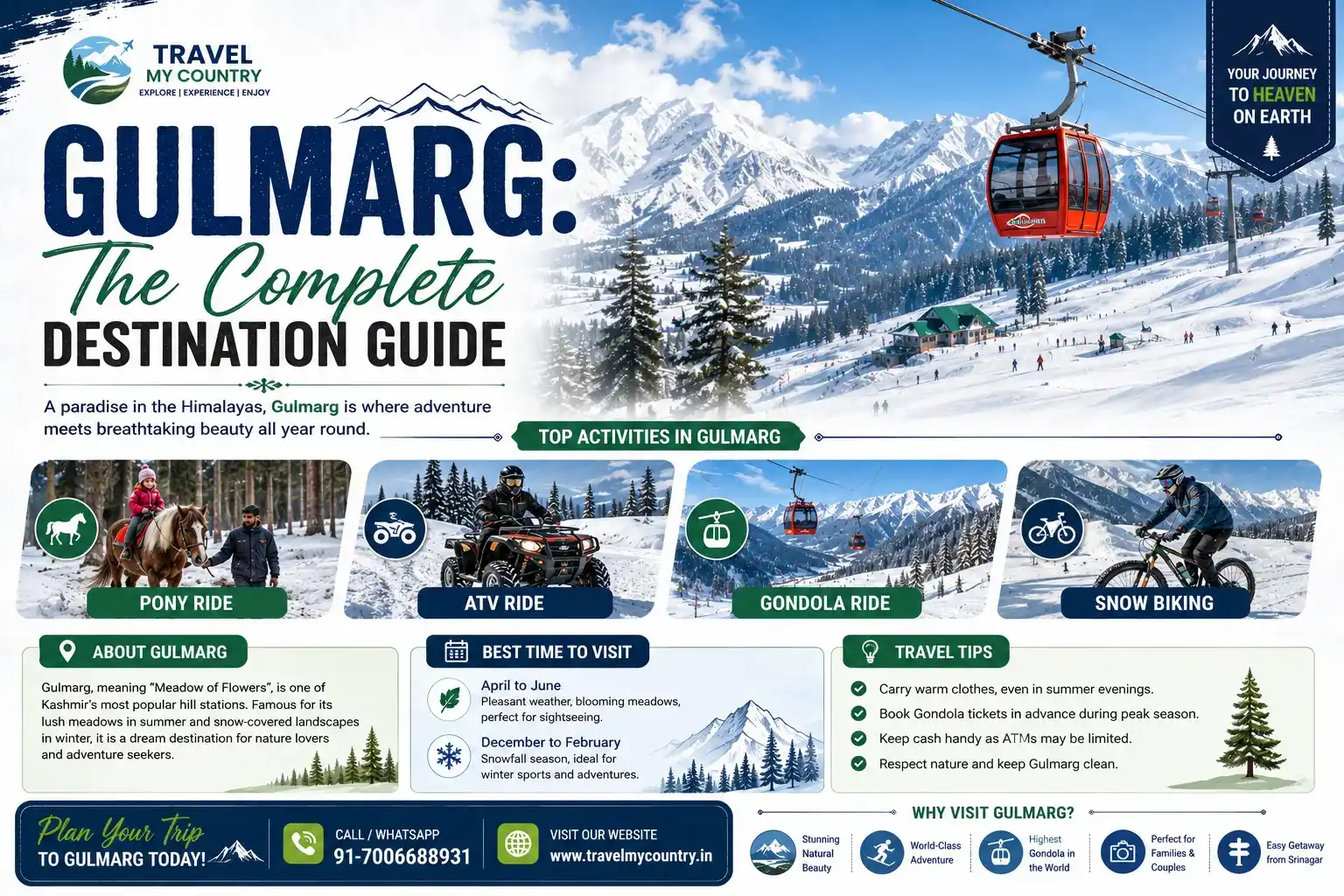
Gulmarg (2,650 m) sits 51 km west of Srinagar on a wide circular meadow ringed by 4,000+ m peaks. The name means “meadow of flowers” and in May the bowl is exactly that — a vast carpet of wildflowers with the Apharwat massif rising snow-white behind it. In winter, the same meadow becomes one of Asia’s highest ski destinations. The Gulmarg Gondola — Asia’s second-highest cable car — climbs to 3,980 m and is the single most popular tourist infrastructure project in all of Kashmir. We have ridden it over 600 times in all four seasons. Here is what you actually need to know.
How to Reach Gulmarg from Srinagar
The drive from Srinagar to Gulmarg is 51 km and takes 1.5–2 hours via Tangmarg. The road is good from Srinagar to Tangmarg (40 km, NH-1 spur); the final 11 km from Tangmarg to Gulmarg climbs steeply through pine forest and has sections of narrow switchbacks. Private cabs charge ₹1,800–₹2,400 one-way. JKSRTC minibuses run from Srinagar’s Batmaloo terminal at 08:00 and 09:00 for ₹80, but they are slow and infrequent. We recommend leaving Srinagar by 07:30 to reach Gulmarg’s Gondola ticket counter before 09:00 — queue management becomes critical after that (see Gondola section).
The Gulmarg Gondola — Phase 1 and Phase 2 Explained
The Gondola operates in two phases. You do not have to ride both — they serve different purposes and different fitness levels.
Phase 1: Gulmarg Meadow (2,650 m) → Kongdori (3,050 m)
Phase 1 rises 400 m in approximately 12 minutes. The views from the cable car over Gulmarg meadow and towards Nanga Parbat (in clear weather) are already excellent. At the top there is a cafe, a skiing nursery slope, and a broad ridge you can walk along. Ticket price: ₹900/person (May 2026 rate, subject to revision). Phase 1 is suitable for everyone — children, elderly guests, anyone with moderate fitness. If the weather is clear this is non-negotiable; go up.
Phase 2: Kongdori (3,050 m) → Apharwat Peak (3,980 m)
Phase 2 continues from Kongdori up to the Apharwat ridge at 3,980 m — a further 930 m climb in 18 minutes. This is where the experience becomes dramatic: the view from the top takes in multiple Himalayan peaks, including clear sightlines towards the Pakistan-administered side of the LoC on clear days. There is permanent snow at the top year-round. Ticket: ₹900/person additional (so ₹1,800 total for both phases). Important caveat: Phase 2 is frequently closed — for wind, snow conditions, or maintenance. We have been caught out by Phase 2 closures on roughly 1 in 4 visits during the shoulder seasons. Check with the ticket counter on the day. Also note: altitude sickness at 3,980 m is real. Anyone with cardiac history or respiratory issues should skip Phase 2. Spend no more than 45–60 minutes at the top.
Gondola Ticket Queue — What We Have Learned After 600 Rides
The Gondola ticket counter opens at 09:00. In peak season (May–June and December–January), queues form from 07:30. By 10:30, waits can stretch to 3–4 hours. Our strategy for guests: send them to the ticket counter the moment they arrive (ideally pre-09:00), while the driver parks. Buy Phase 1 and Phase 2 tickets simultaneously if your group plans to do both — you cannot easily buy Phase 2 tickets at Kongdori mid-visit during peak hours. Online booking is technically available on the JKGCBL website but has been unreliable in our experience — we always buy physically at the counter.
Gulmarg Golf Course
The Gulmarg Golf Course (18 holes, 2,650 m) is one of the highest golf courses in the world and the oldest in Asia (established 1891 by the British). A round costs approximately ₹1,800–₹2,400 for green fees. Club hire is available for ₹600–₹800. The course is open from May to October. Even non-golfers find a walk around the perimeter pleasant — the fairways are surrounded by the meadow and the Apharwat backdrop is stunning.
Gulmarg Meadow Walk
The Gulmarg meadow (the “Golf Course Bowl”) is 3 km in circumference and can be walked in 45–60 minutes. Horses are available at every corner for ₹300–₹600 per ride if you prefer. The morning light (07:00–09:00) on the meadow before the tourist crowds arrive is our favourite time in Gulmarg. If your group has an early start, we often build a meadow walk into the itinerary before the Gondola queue opens.
Alpather Lake Trek
From Apharwat Peak (Phase 2 top station), a 3–4 km trek leads to Alpather Lake (3,843 m) — a high-altitude lake that remains frozen until July and reflects the peaks surrounding it from August onwards. The trail is not technical but is at altitude; acclimatisation at Phase 2 for 30 minutes before setting out is sensible. Horse rides cover the same trail for ₹800–₹1,200. We recommend this only for guests who are fit and confident at altitude — it is one of the best experiences in the entire Kashmir region for those who qualify.
Skiing in Gulmarg
Gulmarg’s ski season runs December to March. Apharwat at 3,980 m has consistent powder from January to February. The ski area covers beginner slopes near the meadow (nursery), intermediate runs from Kongdori down, and advanced free-ride terrain from Apharwat. Equipment hire is available locally for ₹800–₹1,500/day. Ski instructors charge ₹1,500–₹2,500 for a half-day lesson. We have sent over 60 guests to Gulmarg for skiing and can book bundled ski-and-stay packages from December onwards. Note: Gulmarg is not Zermatt. Grooming is limited, lifts beyond the Gondola are basic rope tows, and the après-ski scene is minimal. But for scenery, altitude, and powder snow, it is extraordinary value.
Best Time to Visit Gulmarg by Season
May–June: Green meadow, wildflowers, clear Gondola views. Best overall. Temperatures 8–18°C. Gondola Phase 2 usually operational.
July–August: Light rain, lush green, moderate crowds. Phase 2 operational but can close on stormy days. Good value period.
September–October: Golden meadow, crisp air, thin crowds. Our personal favourite for photography. Phase 2 often closes from late October for early snowfall.
November: Transition month. First snow possible but inconsistent. Gondola Phase 2 typically closed. Some years beautiful, some years muddy — a gamble.
December–February: Peak ski season. Deep snow, Phase 2 open for skiers. Non-skiers can enjoy snow experiences from the meadow. Average temperatures -8 to +2°C. Book early for December.
March–April: Spring snowmelt, slush on lower slopes, Gondola intermittently open. We do not generally recommend this period.
Overnight Stay in Gulmarg
Gulmarg has a small but growing hotel stock: the heritage Khyber Himalayan Resort (5-star, ₹15,000–₹35,000/night), the mid-range Hotel Highlands Park (₹4,500–₹8,000/night), and several small guesthouses at ₹2,000–₹4,000/night. We strongly recommend at least one overnight here — the post-sunset light on the meadow and the pre-sunrise views from the hotel windows are special. With an overnight you also get a head start on the Gondola queue the next morning without the 1.5-hour drive from Srinagar.
We have run 350+ Gulmarg trips. We know the Gondola queues, the weather windows, and the right hotels for every budget. Let us build your itinerary.
Get a Free Gulmarg Quote →
Frequently Asked Questions
Can I visit Gulmarg as a day trip from Srinagar?
Yes — Gulmarg is the most common day excursion from Srinagar on our packages. A day trip gives you enough time for the Gondola (both phases), a meadow walk, and lunch. Leave Srinagar by 07:30 to beat the Gondola queue. Return to Srinagar by 17:00. An overnight stay is better but not essential for a first visit.
Is the Gondola operational in all months?
Phase 1 operates year-round except during maintenance shutdowns (typically 2–3 weeks in April/November). Phase 2 is seasonal and weather-dependent — it closes when wind speeds exceed safety limits or when snowfall makes the top station dangerous. We check operational status before every departure and will tell you on the morning of your visit.
What should I wear for the Gondola Phase 2 in summer?
Even in June, the Apharwat top station (3,980 m) is cold — temperatures of 0–5°C with wind chill. Carry a warm fleece or down jacket, wear walking shoes (not sandals), and bring sunglasses — the UV at altitude is intense and the snow reflection compounds it. We remind all our guests of this at briefing; it surprises people who arrive in summer clothes expecting warm weather throughout.